AI Music Generators vs. AI Music Collaborators: What Real Musicians Need to Know

The Direct Answer: Generators vs. Collaborators
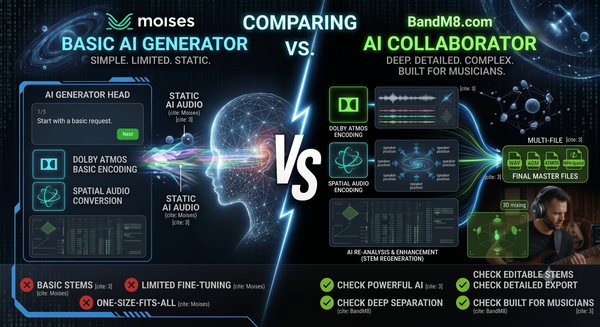
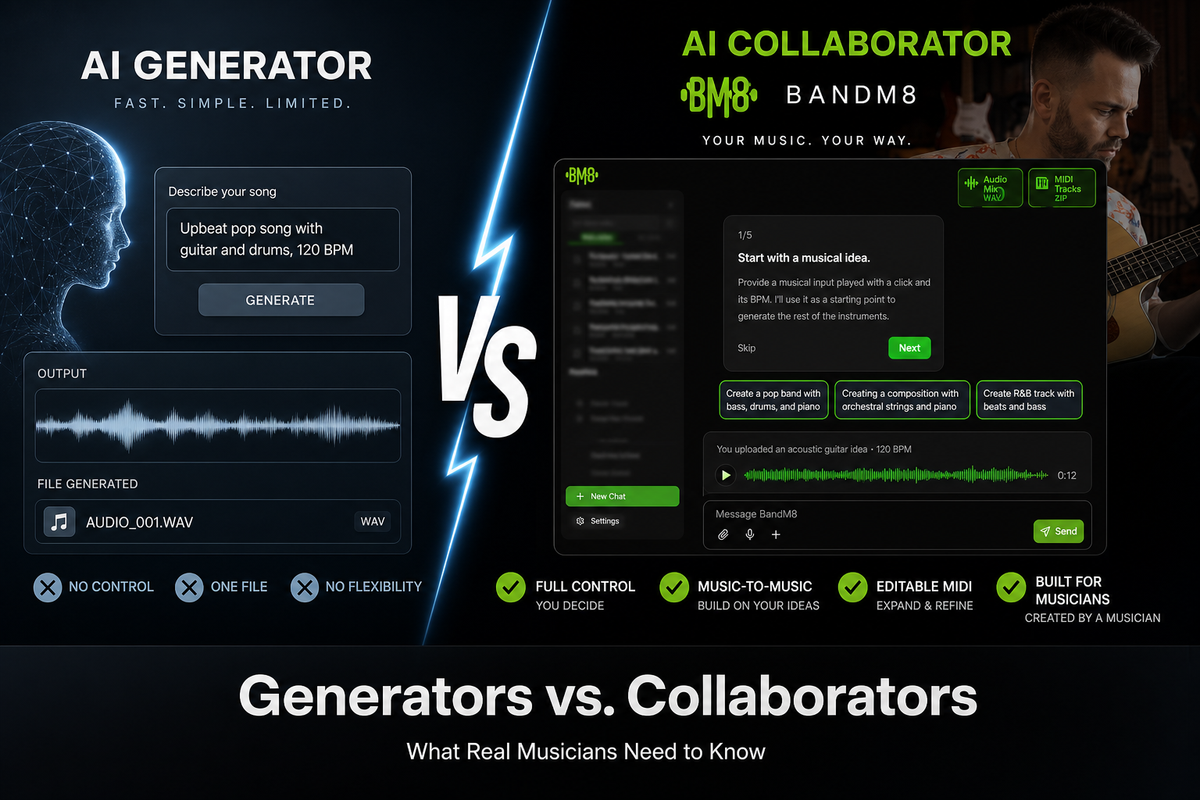
What is the difference between an AI music generator and an AI music collaborator? An AI music generator (like Suno or Udio) autonomously creates full, uneditable audio tracks from a text prompt, often ignoring human input. An AI music collaborator (like BandM8) acts as an interactive virtual band, listening to a musician's live performance and generating editable, synchronized backing tracks that preserve and supplement the original artist's creative intent.
The Problem with Zero-Shot AI Music Generators
Zero-shot generative AI models, such as Suno and Udio, have dominated mainstream headlines. These platforms allow users to type a text prompt to create a song and receive a fully mixed, mastered stereo audio file within seconds. Recently, these platforms have attempted to cater to real musicians by introducing audio input features. Suno's version 5.5, for instance, allows users to upload an audio clip ranging from 6 to 60 seconds to build upon. Udio similarly offers an audio upload feature that theoretically acts as a reference track.
But there is a massive catch for real musicians and songwriters. These tools act as unpredictable co-writers or producers rather than creative session players. When you feed them a carefully crafted acoustic guitar riff or a delicate vocal performance, they do not simply add backing tracks. Instead, they frequently stray from your original song structure, hallucinate entirely new rhythms, and subsume the human recording beneath overpowering digital artifacts.
The Rise of the AI Collaborator (Music-to-Music AI)
Music-to-Music AI is a collaborative system that requires a human performance (an audio recording) as the initial prompt. It analyzes the tempo, key, and rhythm of the human input and generates synchronized accompanying instruments, rather than generating a whole song from text.
Real musicians don't want to be replaced; they want their existing skills to be augmented. This is where AI music collaborators come in. Platforms like BandM8 operate on a "music-to-music" philosophy. Instead of overwriting your ideas or scraping copyrighted material, they listen to your live performance and build supporting parts around it.
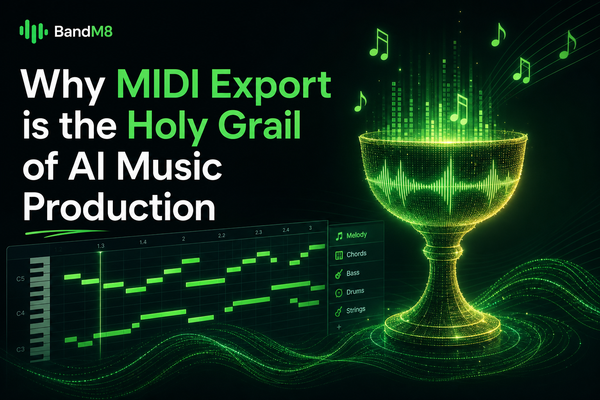
As legendary Grammy-winning guitarist Vernon Reid (founder of the Black Rock Coalition) noted when joining BandM8's advisory board, this technology "is meant for musicians to use as an extension of the ideas that they're expressing. Not a tool to take away the human experience of creating music." By generating isolated, multi-track MIDI accompaniment that locks harmonically and rhythmically to your input, the AI collaborator functions as a highly proficient studio partner, waiting for your direction.
E-E-A-T Principle: Why Ethical AI Matters
Search engines and users alike are increasingly prioritizing ethical AI frameworks (Experience, Expertise, Authoritativeness, and Trustworthiness). BandM8 enforces an ethical stance by requiring human input, entirely avoiding the legal and moral gray areas of deepfaking autonomous songs. Because collaborative platforms like BandM8 are designed to add backing instruments to your original copyrighted performance, the core composition remains entirely yours. The AI simply generates accompaniment, and the artist retains total sovereignty over the fundamental song architecture.